Monday, February 25, 2013

Black Tea

Black tea is a type of tea that is more oxidized than oolong, green and white teas. All four types are made from leaves of the shrub (or small tree) Camellia sinensis. Black tea is generally stronger in flavor than the less oxidized teas. Two principal varieties of the species are used – the small-leaved Chinese variety plant (C. sinensis subsp. sinensis), used for most other types of teas, and the large-leaved Assamese plant (C. sinensis subsp. assamica), which was traditionally mainly used for black tea, although in recent years some green and white have been produced.

While I enjoy a freshly brewed cup of green tea, there are times when I crave the fuller flavor of black tea. And why not? Green tea may be China's national drink, but black teas are known for their distinct flavors. Black tea from China can be sweet or spicy, with a hint of chocolate or the sweet fragrance of orchids.

Until recently, I worried that, by indulging my craving, I was losing out on green tea's numerous health benefits. But recent research indicates that black tea has its own health giving properties.


Green or Black Tea - which is better?

Until recently, tea research has focused on green tea. Green tea is loaded with the compound epigallocatechin gallate (EGCg), a powerful anti-oxidant. Since the fermentation process used to make black tea converts EGCg into other compounds, researchers assumed black tea had less health benefits than green tea. However, recent studies indicate the compounds contained in black tea - theaflavins and thearubigens - do more than contribute to its dark color and distinctive flavor. They also provide health benefits originally attributed solely to green tea.

It's important to remember that tea research is still in the early stages. Jane Higden, a research associate with the Linus Pauling Institute, states in a recent article: "although numerous observational studies have examined the relationships between tea consumption and the risks of cardiovascular disease and cancer, there is no conclusive evidence that high intakes of tea are protective in humans." Still, it looks like there is no need to worry about depriving yourself of possible health benefits if black tea is your beverage of choice.

Here are the results of research into black tea:

Black Tea Research


    A long-term study by the Netherlands National Institute of Public Health and the Environment found a correlation between regular consumption of black tea and reduced risk of stroke. Researchers looked at data from a study examining the health benefits of foods that are high in flavonoids - phytonutrients with antioxidant benefits. While some of the flavonoids were obtained from fruits and vegetables, seventy percent came from black tea. The study looked at 552 men over a 15 year period. Researchers concluded that the flavonoids in black tea helped reduce the production of LDL - the "bad" cholesterol that can lead to stroke and heart attacks. Furthermore, men who drank over four cups of black tea per day had a significantly lower risk of stroke than men who drank only two to three cups per day.
    A separate study by Dr. Joseph Vita at Boston's School of Medicine supported these results. For four months, sixty-six men drank four cups of either black tea or a placebo daily. Dr. Vita concluded that drinking black tea can help reverse an abnormal functioning of the blood vessels that can contribute to stroke or heart attack. Furthermore, improvement in the functioning of the blood vessels was visible within two hours of drinking just one cup of black tea.
    Finally, a study of over 3,000 adults in Saudi Arabia - where black tea is favored over green - found that regular consumption of the dark brew can reduce the risk of coronary heart disease by fifty percent.

Ref: http://chinesefood.about.com/library/weekly/aa021103a.htm

Wednesday, February 20, 2013

Garlic Medicinal Uses

Nature has gifted us lots of things to keep our self healthy. One of those gifts is Garlic. There are lots of saying & proverbs about Garlic which reflects its importance & quality such as Garlic is as good as 10 mothers & Garlic a day keep sickness at bay. Moreover, it is regarded as a miracle by naturopaths & herbalists. Various researches have proved it that Garlic is good for health and is beneficial in curing various health problems.

The garlic clove contains various nutrients as water soluble nutrients include vitamins, enzymes, amino acids and natural sugars & oil soluble nutrients includes sulphur compounds originating from an amino acid named alliin which is converted to a pungent compound called allicin which has natural antibiotic properties. Presence of sulphur in garlic is the cause of its pungent smell. However, the quality of Garlic cannot be over hidden due to this smell. In several scientific studies it has been found that:

Garlic Medicinal Uses

  •     Garlic acts as an antiseptic & helps in curing the wounds very quickly.
  •     One of the health benefits of garlic is that it helps in fighting against various infection & acts against inflammation and infection, including colds, coughs by adding a freshly cut raw clove to food three times a day or take kyolic garlic capsules but raw is always best.
  •     In certain studies in China it has been shown that it contains chemicals that prevent cancer. They suggest that eating garlic on regular basis provides some protection against cancer.
  •     Fresh or cooked garlic or 500 mg garlic capsules twice daily helps in lowers down the blood pressure & cardiovascular problems. It increases the levels of high density lipoproteins & reduces harmful cholesterol in the blood & keeps arteries and heart healthy.
  •     It thins the blood, reduces clotting and helps in controlling blood pressure and poor circulation.
  •     Garlic stimulates the immune system of body & helps in fighting against various diseases.
  •     Prevents & relieves chronic bronchitis, respiratory problems, and catarrh.
  •     It acts as a nasal decongestant & expectorant.
  •     It is also helpful for hum oral asthma, hysteria, dropsy & scurvy.
  •     Garlic works as a cleanser of the digestive system, helps in curing flatulence, kills internal parasites and is an excellent internal antiseptic.
  •     Researcher recommends daily dose of fresh garlic of about 4 gm, equivalent to one or two small cloves for each & every person who wants to keep himself healthy.

There are various historical facts which prove that Garlic has been used from centuries for its medicinal uses. From around 3000 B.C. Chinese scholars are praising garlic. Moreover, workers who were engaged in constructing the Great Pyramids of Giza lived mainly on garlic & onion. During World War I, Garlic was used to control infections in wounds. It was also used for controlling a raging epidemic of flu in 1963 in Russia. So now start taking garlic as a diet in your food & enjoy your life without lots of disease. Most important thing is that it doesn't have any side effect. So you can take it without any doubt. I know now you can't avoid such a nice gift of nature which can help you out in various ways. Oh! I am very sorry I forgot to tell you one of the most important things that, it is also helpful in getting rid of VAMPIRES.

Garlic is an important medicinal herb that is readily available everywhere, unlike some of the other herbs mentioned on these pages.  It is one of the safest herbs, and as such can be taken often.  It does, however,  have its drawbacks, as we all know.  Bear this in mind when using remedies (especially internal ones), and cut back when family and friends start avoiding you. 

Garlic does indeed have scientifically-proven medicinal properties.  It contains a substance called Allicin, which has anti-bacterial properties that are equivalent to a weak penicillin.  It appears that cooked garlic weakens the anti-bacterial effects considerably, however, so don't count on cooked garlic with meals for much in the way of a curative. 


Garlic appears to have anti-bacterial and anti-viral properties.  The list is long when it comes to its uses as a remedy.  This list includes wounds, ulcers, skin infections, flu, athlete's foot, some viruses, strep, worms, respiratory ailments, high blood pressure, blood thinning, cancer of the stomach, colic, colds, kidney problems, bladder problems, and ear aches, to name a few.  It is believed to cure worms in both people and animals - try giving the dog a clove of garlic daily (but he's not gonna like it).

For most internal problems, eating garlic raw is probably the most potent way to take it.  However, due to the obvious lingering odors associated with this, a tincture can be made by soaking 1/4 pound of peeled and separated garlic cloves in 1/2 quart of brandy.  Seal tightly and shake every day.  Strain and bottle after two weeks of this, and take in drops - 25-30 a day, if desired. 

For cough, flu, and respiratory ailments, make a cough syrup out of garlic.  Slice 1 pound of fresh garlic and pour one quart of boiling water over it.  Let sit for 12 hours, then add sugar until you reach the consistency of a syrup.  Add honey for better taste, if desired.

For sore throat, make a garlic tea by steeping several cloves of garlic in half a cup of water overnight. Hold your nose and drink it.

Externally, garlic is a known anti-bacterial and anti-infection agent.  An interesting use for ear aches is to slice a garlic clove, heat briefly in a small amount of virgin olive oil, and let cool.  Then use a drop of two in the affected ear (strain the mixture beforehand, of course).

Make an Ointment out of garlic (use cloves instead of leaves, stems, or flowers as described in Ointments) for wounds, cuts, athlete's foot, or any other external skin irritation, fungus, or infection.  Also, try a few drops of Oil on a toothache for pain relief. 


Garlic is classified as both a food and medicinal herb. It can and should be eaten as food, but it can also be taken in supplement form to augment a healthy diet when more serious health problems arise. Here's how this alternative medicine works:

Healing Properties

Garlic has many healing properties, but the most research has been done on its potential to help reduce heart disease. Garlic has been intensively studied, and numerous large studies have shown that taking supplements that mimic fresh garlic can significantly lower LDL cholesterol levels without hurting beneficial HDL cholesterol levels. Garlic appears to act by blocking the liver from making too much LDL cholesterol.

There is also some evidence that garlic supplements can mildly lower blood pressure by dilating or expanding blood vessels. And garlic helps prevent blood clots -- and therefore reduces the risk of heart attack and stroke -- by decreasing the stickiness of platelets, which are tiny disk-shaped bodies in the blood that are necessary for blood clotting. When platelets are too sticky, they form clumps that can adhere to artery walls and contribute to clogged arteries.

Garlic has also been shown to reduce pain and other symptoms in people with rheumatoid arthritis. And it reduces the size of some cancerous tumors and helps prevent some cancers, particularly those in the intestines. However, the research on this is not nearly as far advanced as that for garlic and heart disease, so do not use garlic supplements without consulting with a natural health care professional.

One of the oldest uses of garlic, however, is as an antibiotic. Garlic kills a range of microbes, including viruses, bacteria, fungi, and parasites, and can be effective against such conditions as athlete's foot, thrush (a fungal infection of the mouth), viral diarrhea, and the ulcer-causing bacteria Helicobacter pylori. Only fresh garlic or supplements that mimic it have these effects.
Preparation and Dosage

For best results, fresh garlic or preparations that mimic it need to be used. Dried or cooked garlic, as well as garlic oil, lose a significant amount of potency during processing (though they aren't worthless and are still beneficial to eat as food). Preparations used for medicinal purposes should state that they have allicin potential of at least 6,000 mcg on the label. Alternately, eat one chopped clove of fresh garlic per day. (The fresh garlic that has been peeled and sometimes minced and sold in jars in the grocery store is not potent enough.)

Good quality garlic supplements list the "allicin potential" they contain and not a certain amount of allicin. This means that when the supplement gets to the stomach, it releases 6,000 mcg of allicin, the pungent chemical that accounts for garlic's sharp flavor. The supplements do not contain actual allicin, because this compound is extremely unstable and quickly breaks down. Instead, good garlic supplements contain alliin, the stable precursor to allicin. It is released only upon digestion, so your body can make the best use of it.
Storage

Store garlic in a cool, dark, dry place with good air circulation. Check on it occasionally, and remove any cloves that have gone bad, being careful not to nick the remaining cloves.


Different Types of Tea

All the tea that we drink comes from the Camellia Sinensis plant, or the tea plant. Although one would come across different varieties of tea in the world the three main varieties are the India tea, the China tea and the hybrid tea. It is from these that the different types of tea like the green tea, the black tea, the white tea, the herbal tea and oolong tea are prepared.


Tea Bag
Modern pyramidal nylon tea bag


Green Tea: When tea leaves are picked, they generally whither and dry and when this occurs, oxidization takes place. When green tea is manufactured, it is not allowed to oxidize. The leaves are dried very quickly either in a pan or an oven to dehydrate them and then they are stored. This process retains the polyphenols catechins and the flavanoids which make drinking green tea a healthy and beneficial option. However green tea possesses a grassy taste and it loses its flavor within a year.

To brew a cup of green tea, water which is not more than 80 degrees Celsius should be poured over the tea leaves. Let the leaves steep in the water for about two to three minutes. Some of the benefits of green tea are its antioxidant properties which aids in preventing cancer, raising metabolism rate and cutting fat and even reducing the probability of heart diseases. Due to its short brewing time, green tea is stimulating.

Black Tea: This tea is stronger than any other type of tea. The caffeine content is higher in black tea as compared to the less oxidized varieties. It retains its flavor for many years. Black tea is the tea that enjoys the maximum sales in the world.

To brew a cup of black tea we need a teaspoonful of tea leaves for a cup of tea. The tea leaves are steeped in boiling water for at least three to four minutes before it is strained and served. Plain black tea without sugar contains antioxidants and is beneficial in reducing cardiovascular diseases.

Cup of White Tea

A cup of healthy (but expensive) white tea
White Tea: This is the rarest variety of tea. The leaves are picked and harvested before they are fully open and the buds still have a covering of white hairs on them. White tea undergoes the least processing and is also not fermented. It has a light and sweet flavor and contains less caffeine and more antioxidants than any other type of tea.

The ideal temperature of water for brewing white tea is 76 to 85 degrees Celsius. The leaves should be steeped in water for at least seven to eight minutes.


Herbal Tea: Tisane or ptisan is an herbal infusion. Tisane is made with any part of the plant either dried or fresh flowers, roots, seeds or leaves over which boiling water is poured. Flavored teas are prepared by adding this to regular tea like the jasmine tea of China. There are different types of herbal tea which can be consumed for medicinal purposes.


Oolong Tea: Being of Chinese origin, this tea is a cross between the popular black and healthy green varieties and the two styles commonly associated with this tea are green and amber. The uniqueness of this tea is attributed to the different manner in which its leaves are prepared and owing to this reason apart from being bereft of the leafy flavor of the green tea its taste is distinct from other types of tea as well.

The traditional Oolong tea is brewed in a special type of pot known as Gaiwan and the final sip may vary according to the length of brewing time.

Monday, February 18, 2013

Chetan Bhagat - Revolution 2020


Once upon a time, in small-town India, there lived two intelligent boys.
One wanted to use his intelligence to make money.
One wanted to use his intelligence to create a revolution.
The problem was, they both loved the same girl.


Welcome to Revolution 2020. A story about childhood friends Gopal, Raghav and Aarti who struggle to find success and love in Varanasi. However, it isn’t easy to achieve this in an unfair society that rewards the corrupt. As Gopal gives in to the system, and Raghav fights it, who will win?


 Gopal hails from a poor family and fails to get an admission to the best engineering colleges in the country. Heartbroken, he moves to Kota for a year to prepare for the exams. Raghav comes from a well-to-do family and achieves a good rank in JEE. Delighted, he joins IIT-BHU, one of the premier institutes of India, and embarks on his ambition to become a journalist. Aarti hails from a powerful bureaucratic family, and her aim is to become an airhostess. Aarti falls in love with Raghav while Gopal is at Kota.

Brief
The story starts when Gopal rises as the director of a new engineering college opened in Varanasi, with the power of MLA Shukla, a corrupt politician. He uses the legally strangled land of his uncle to manipulate and build the college. Raghav, on the other hand, completes his engineering and joins the largest selling newspaper Dainik as an intern. He starts shedding light on all the wrongdoings of Shukla and exposes him in public.

Things take a different turn when Aarti starts developing a soft corner for Gopal.

Who will win her love towards the end?

Will Raghav's crusade against the corrupt system fail?

Revolution 2020 is a gripping story of love, the corrupt educational system and clashing ambitions.

Revolution 2020 got mixed reviews from critics and readers. The book turned out to be yet another bestseller from the Chetan Bhagat stable.

About The Author
Chetan Bhagat is an Indian speaker, columnist and author. He quit his international investment banking career in the year 2009 to devote his entire time to writing.

Chetan Bhagat is a graduate from IIT in New Delhi and a post graduate from IIM Ahmedabad; both institutes of high repute and distinction. He married his sweetheart Anusha Suryanarayan, whom he met at IIM-A, in the year 1999. Their love story was the inspiration for the book 2 States.

From the bestselling author of Five Point Someone, one night @ the call center, The Three Mistakes of My Life and 2 States, comes another gripping tale from the heartland of India.  Are you ready for the revolution?

If so, try buying it online

Wednesday, February 06, 2013

Temple Run 2

Temple Run 2 launched first for iOS and Android users had to sit back and watch while the game topped the 20 million download mark. Of course, a little bit of a teasing wait seems to only left Android users anxious to download the game and begin playing. In fact, once Temple Run 2 landed in Google Play the combined downloads shot up and achieved a record breaking 50 million downloads in just 13 days.


Temple Run 2 launched first for iOS and Android users had to sit back and watch while the game topped the 20 million download mark. Of course, a little bit of a teasing wait seems to only left Android users anxious to download the game and begin playing. In fact, once Temple Run 2 landed in Google Play the combined downloads shot up and achieved a record breaking 50 million downloads in just 13 days.

That being said, that is not to say the app launched perfectly on Android. The app actually launched without support for the back button and an update was quickly rolled-out. And well, it looks like the team at Imangi Studios is now showing support for older devices and devices with lower resolution displays. These goodies come by way of another Temple Run 2 app update. This update brings the app up to version 1.0.1.1 and it remains available for free and by way of the Google Play Store and Amazon Appstore.

Detailing what this update includes; Temple Run 2 users can now expect “improved performance on older devices.” A bit general of a statement, however we suspect you will know if this applies to you. Basically, if you had tried to play the game and had issues, you may want to give it another look. Another fix here includes lower resolution devices, specifically this update fixed layout issues on devices with a 320 x 240 resolution.

Otherwise, this update also fixed the track pop-in issue, a bug that caused the same objective to be shown more than once and “various” other bugs and “minor” improvements. All said and done, a decent update of fixes. Finally, for those who have yet to play Temple Run 2, now seems like as good a time as any to give it a go.

Temple Run addicts have propelled its sequel into new territory.

In 13 days, Temple Run 2 has been downloaded more than 50 million times by iOS, Android, and Kindle users, developer Imangi Studios said yesterday, making it the fastest-growing mobile game ever.

In reaching this milestone, the action game topped the previous record holder, Angry Birds Space, which rocketed to 50 million downloads in 35 days.

Temple Run 2 places you in a jungle where you have to outrun a giant ape, leap over chasms, and swing on ropes to get past hazards. Along the way, you pick up gold coins to score points. But one wrong step, and your character meets an untimely demise.

Temple Run 2 debuted in Apple's App store on January 17 and quickly became the top free app with more than 6 million downloads in less than 24 hours. The game then swung into Google Play and Amazon Marketplace, picking up even more adventurers.

"Temple Run has evolved into something so much bigger than us," Imangi co-founder Keith Shepherd said in a statement. "The game has performed beyond our wildest dreams, and we are thrilled that gamers and fans have embraced Temple Run 2 in such a short period of time."
Related stories

Friday, February 01, 2013

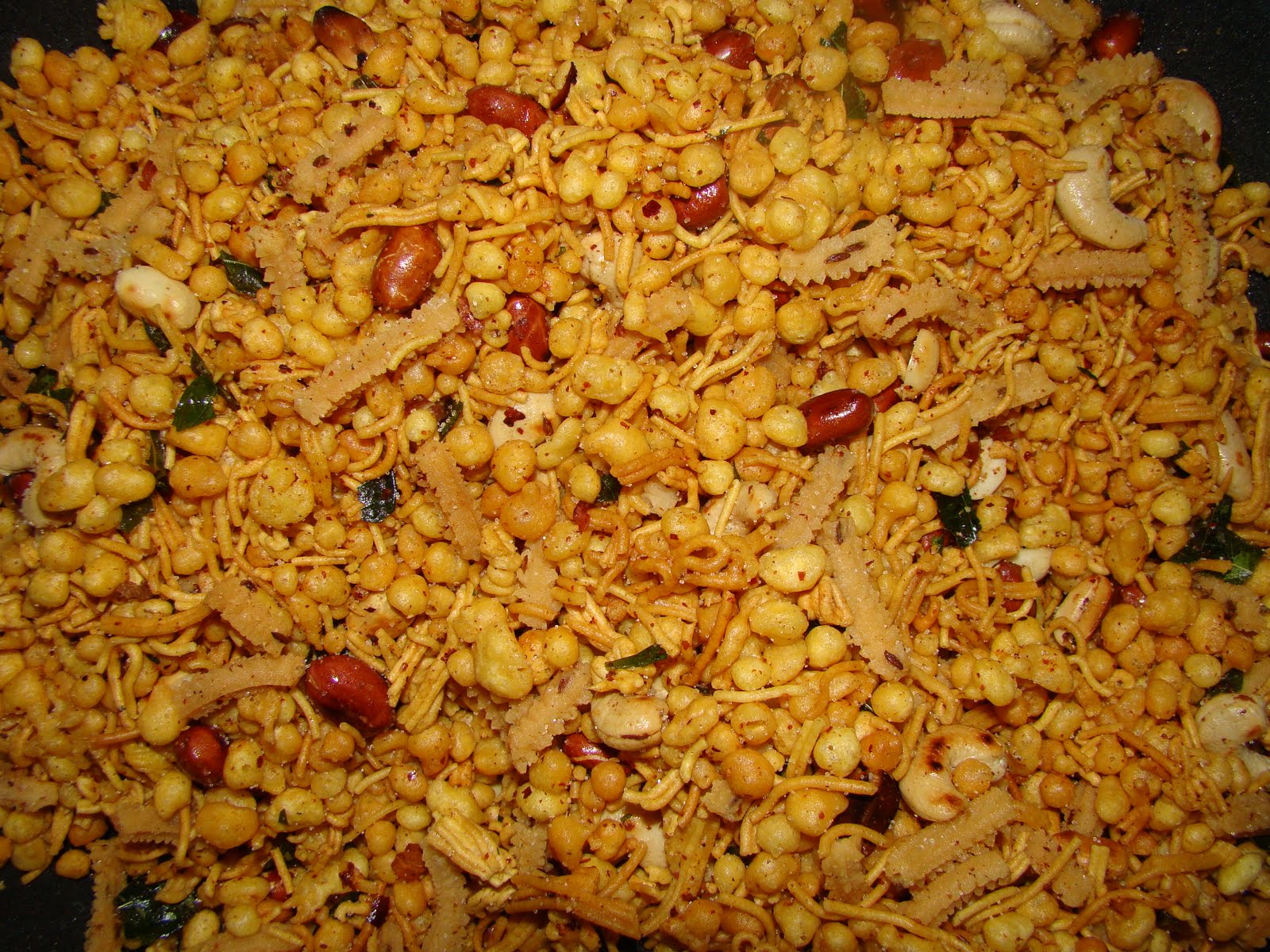
Recipe - Chennai mixture


Time Taken : 15-30 mins

Servings : 3-4

Method
  • Deep fry the peanuts, roasted gram,rice flakes(thick or thin) curry leaves, cashew nuts, cornflakes separately in oil and drain the excess oil in a kitchen towel. While frying them add little salt to the oil.
  • Mix all the ingredients together and add crushed pepper to this.
  • Crush the ompodi , ribbon pakoda and murukku into small pieces .
  • Mix well nicely. Put this in a airtight box and shake this nicely.
  • Flavorful mixture is ready to consume.
  • Store this in an airtight box and enjoy with tea/coffee.

Thursday, January 31, 2013

Vishwaroopam

Vishwaroopam is a 2013 Indian Tamil spy thriller film written, directed and co-produced by Kamal Haasan who is also enacts the lead role. The film has Pooja Kumar, Rahul Bose, Andrea Jeremiah and Jaideep Ahlawat in supporting roles. Also made simultaneously in Hindi as Vishwaroop, the film featured soundtrack composed by Shankar-Ehsaan-Loy, with lyrics by Vairamuthu and Haasan himself while Javed Akhtar translated them for the Hindi version.

Development of the project commenced after the release of Haasan's Manmadhan Ambu (2010) when several of the crew were brought in from the United States to lend their technical expertise. The direction was taken over by Haasan from Selvaraghavan and reports indicating a comparison with several English films surfaced during the production. The first teaser was revealed in April 2012 and first theatrical trailer was revealed in June 2012. Vishwaroopam is the first Indian film, and second film worldwide after Red Tails (2012), to utilize the new Auro 3D sound technology. The film is also the first of its kind to release via direct-broadcast satellite, also known as direct-to-home (DTH), a concept which allows a one-time viewing on home entertainment systems for a fee of INR1,000 (US$18.2). An early estimate by Haasan stated the film to earn INR350 crore (US$63.7 million) from all its sources including music and distribution rights.

The film released worldwide, excluding Tamil Nadu, on 25 January 2013. Legal controversies regarding the film's portrayal of Islamism arouse as several Muslim extremist groups protested the film's release in Tamil Nadu, resulting in an official ban being imposed on the film in the state by the Madras High Court. The ban resulted in similar decisions being made in Sri Lanka and Malaysia while release was delayed in the states of Andhra Pradesh, Kerala and Karnataka. Despite the fragmented release, Vishwaroopam garnered highly positive reviews from critics, most of which had downplayed claims of the film being anti-Muslim. The ban on the film in Tamil Nadu was lifted by Madras High Court following a special screening, but later uphold the ban on January 30,2013 and further release of the film was blocked by the government of Tamil Nadu over law-and-order concerns.. The consecutive banning of the film was strongly criticized by the Indian film fraternity, including the Central Board of Film Certification.Kamal Haasan said that he will file a petition in the Supreme Court to overturn the ban on his film 'Vishwaroopam'.Kamal Haasan was deeply grieved over the ban in Tamilnadu and even said that he is thinking of leaving Tamil Nadu for some other secular state in India.

Chief Minister Jayalalithaa  Recent Comments
Chief Minister Jayalalithaa today tried to justify ban on Kamal Haasan's  Vishwaroopam.

She cited shortage of police to provide security at theatres.

Ban on Vishwaroopam imposed based on intelligence inputs about likely violence, the CM said

She also made it clear that she had no personal grudge against Kamal Haasan nor had any personal interest in banning Haasan's movie.

Adding that she would facilitate an understanding reached by Haasan and the Muslim groups, Jaaylalithaa said,  "If leaders of Muslim organisations and Kamal Haasan can work out an amicable agreement, government will facilitate that."

Ref: http://news.outlookindia.com/items.aspx?artid=788441

Friday, January 11, 2013

New Features in Joomla 3.0

Joomla has recently released the Joomla 3.0.0 version on September 27th, 2012 with significant updates and major developments. Following right up with the immediate upgrade version Joomla 3.0.1 for security fix on October 9th, Joomla 3.0 is indeed the hot spot for this month. If you haven’t become familiar with it yet, here are the 20 things that are worth taking note in Joomla 3.0.
1. Non-Responsive vs. Responsive
Yup, Joomla is now officially responsive – mobile device ready, due to the help of Bootstrap. The front-end will have the responsive built-in feature, the back-end also inherits this tweak. You will NOW officially be able to get your site under control even when you are ”on-the-go” with just a mobile device!
The Joomla 2.5 Front-end
The Responsive Joomla 3.0 Front-end
The Joomla 2.5 Back-end
The Responsive Joomla 3.0 Back-end

2. Without bootstrap vs. With bootstrap

The big word for Joomla 3.0 is Bootstrap. With basic CSS already integrated into Joomla 3.0, it is aiming for a much better UX for the end-user.
Bootstrap for Joomla 3.0

3. Non+ -LESS CSS vs. LESS CSS

LESS is a dynamic stylesheet language designed by Alexis Sellier and has recently been integrated into Joomla 3.0. The development of a template has significantly changed by the use ofLESS. All the website templates and backend will include /less directory and template.less files. Those two are meant for importing both Bootstrap and JUI (less files and media/jui/less files). That enables the template designers to define which file should be applied to their template, and which one will be imported to the LESS JUI.
Without Less, Joomla 2.5 uses CSS to style
vs. Less in Joomla 3.0

4. Without JUI vs. With JUI (for Extension Developers)

The Joomla User Interface (JUI) library provides a common set of tools that enables component developers to share a common ground of elements, drastically reducing time in coding, without having to innovate and create their own library but still having a clean, nice looking interface. In addition, the loading time is dropped dramatically for users who are surfing around from one Joomla 3.0 site to another, as the javascript and css files are already loaded, adding an extra fast loading speed for the Joomla 3.0 CMS.

5. The Mambo days vs. the Great UX

No longer will you be bored with the old-fashioned interface, Joomla 3.0 did a major improvement on UX that would amaze and make all of us – the fans – fall in love all over again, starting with:
  • The Main Menu
    The Joomla 2.5 main menu
    The Joomla 2.5 main menu
    Main menu in Joomla 3.0 back-end
    Main menu in Joomla 3.0 back-end
  • Dashboard with the new look for administrator statistics module
    Joomla 2.5 dashboard
    Joomla 2.5 dashboard
    Joomla 3.0 dashboard
    Joomla 3.0 dashboard
  • Administrator submenu is now located in the left panel
    The only menu style that you'll find in Joomla 2.5
    The only menu style that you'll find in Joomla 2.5
    Complemented menu on the left panel in Joomla 3.0
    Complemented menu on the left panel in Joomla 3.0
  • A redesigned footer menu for quick status view of your site and a new location for the preview link
    footer
    Footer menu in Joomla 3.0
  • The right panel includes a list of commonly used features
    Commonly used features quick icons are located on the right panel in Joomla 3.0
    Commonly used features quick icons are located on the right panel in Joomla 3.0

6. 7 steps vs. the faster 3 steps installation

Right off the bat, you will immediately feel the ”difference" in UI of the complete redesigned installation screen in Joomla 3.0. The installation process is now simplified in only 3 steps compared to the 7 steps procedure we had with joomla 2.5.
Joomla 2.5 installation screen with the original 7 steps procedure
The 3 steps installation for Joomla 3.0
The installer will auto-detect your language from your browser and the "Yes | No" option is now designed in a color coded button: Yes (Green) | No (Yes)
The old days Yes | No check-box style
vs. New design for your Yes | No button

In this new version, Joomla supports five sample data sets instead of only three in Joomla 2.5.
Three sample data sets on Joomla 2.5
3 sample data sets on Joomla 2.5
vs. five sample data sets on Joomla 3.0
vs. 5 sample data sets on Joomla 3.0

The whole process has tremendously cut back installation time to less than 1 minute, which is a huge improvement for the installation process. Plus, you can save the installation settings for later use by sending it to your email address.
Get the installation settings sent to your inbox

7. Article Manager interface: boring vs. polished

In the back-end, you’ll find a completely refreshing look and feel starting with the Article Manager which now includes a better organized filtering system with more options available, and better defined icons.
The old Article Manager look
Filter friendly and defined icons in Article Manager

Article edit screen has had its own redesign with Publishing Options, Article Options and Metadata Options tabs moved from their usual right panel to the top, the text editor is now up-front and centered.
Article edit screen in Joomla 2.5
vs. Article edit screen in Joomla 3.0

8. Guest user group: Manually creating as needed vs. Automatically available by default

Now you don’t need to bother creating a “guest” level group in Joomla 3.0. It is now available as default upon installation.
There is no sign of Guest user group upon the complete installation of Joomla 2.5
Guest user group is present as default in Joomla 3.0

9. Non-responsive Front-end template vs. Responsive Front-end template

This new responsive minimal front-end template – Protostar – powered by Bootstrap that you’ll find to be versatile and it is simple to customize the template colors by taking advantage of the color picker. Google fonts are allowed in Protostar with a parameter for your heading tag (h1-h6) and site title. You can toggle on or off the parameter in deciding whether or not to use Google fonts for your site, meanwhile that means you are giving up a wide range selection of 500+ google fonts to choose from. Protostar also has a completely natively clean bootstrap customized grid-layout look, it sets a new standard for Joomla template itself.
Brand new Protostar template
advance-setting
Protostar offers a variety of customisation options for users

10. The same old admin template vs. The slick admin template

Joomla 3.0 named its new administrator template after the Egyptian goddess Isis. Compared to the Bluestork administrator template in Joomla 2.5, Isis has been perceivably designed differently. Since the Isis template is built using the flexible Bootstrap grid layout, the administrator interface Isis is also responsive.
Isis - The Joomla 3.0 administrator template

11. Template Beez3: Updated

If you would like the traditional look for the front end, an updated Beez3 template is the other template option which is still available.
Beez3 template in Joomla 3.0

12. Joomla Platform version 11.x vs. 12.x

The new Platform has removed numerous deprecated classes and methods from version 11.4. However, for extensions developers, your components would require reasonably small changes for compatibility with Joomla 3.0. It is advised to stop using deprecated classes as they are meant to be removed in a future version anyway. Several changes in extensions installation (usage ofbase tag in replacement for, stop supporting install/uninstall scripts, com_install/com_uninstall methods in promoting the usage of scriptfile instead, etc...), components (admin.*.php and toolbar.*.php are no longer supported), classes (renamed JFTP as JClientFtp, JLDAP as JClientLdap, JWebClient as JApplicationWebClient, removed and adjustment to number of classes), plugin events (onContentBeforeSave event receives $article by value not by reference as well as onContentAfterSave event), and etc... More details are listed at Joomla Documentation section.

13. Mootools vs. JQuery

Joomla 3.0 is packaged with JQuery in the core. Though the Mootools option is still available in the back-end, it will be initially available for the sake of backward compatibility and is no longer the primary javascript library interface.

14. Manual rearrangement vs. Drag & Drop feature

Thanks to JQuery, Joomla 3.0 finally supports a Drag & Drop sorting feature in the back-end.
Remember the time when we have to re-order it
Remember the time when we have to re-order it "manually" in Joomla 2.5?
Say
Say "yes" to the new Drag & Drop feature for sorting elements in Joomla 3.0

15. Lower vs. Higher PHP/MySQL requirements

You must have PHP 5.3.1 and MySQL 5.1 or newer to get your Joomla 3.0 up and running while Joomla version 2.5.x only requires PHP 5.2.4 and MySQL 5.0.1.

16. Normal settings vs. Advanced module option

The advanced module settings allow you to modify:
  • Module tag: to change the div in section
  • Bootstrap size: changing Bootstrap span grid class
  • Header tag: which aims for better SEO
  • Header class: adds the Bootstrap class in the page header
  • Module style: to inherit the Joomla installed template for the module styling.
Your usual and limited module settings in Joomla 2.5
Advanced module settings in Joomla 3.0

17. Simple Pie vs. JFeed

Switch the feed management from SimplePie to JFeed to get rid of several existing strict error, due to the fact that Simple Pie has been quite old and no one has really done any update on its library for a while now. On the other hand, Simple Pie’s users are confronted with its crucial errors and lack of flexibility for the current version. This encourages Joomla 3.0 to step up with the use of Louis Landry's JFeed, which is claimed to be simple, extensible and native Joomla contribute to the enhancement of feeds generator in a better and powerful way that Simple Pie wouldn’t allow.

18. Non-supported vs. A new PostgreSQL driver is included

You are now able to run your Joomla 3.0 site using PostgreSQL database which further makes the platform ”database independence" for the very first time as it is only integrated with MySQL & SQL server by default.

19. Saving full-detailed articles vs. Saving blank articles

Surprisingly, Joomla 3.0 allows administrative users to create and save blank articles. This feature strives for support users to create articles with even images only and no text content as needed.
Articles with no content will not be allowed to save in Joomla 2.5
No worry! Saving blank articles are NOW acceptable with Joomla 3.0

20. Updated unit testing in CMS

Unit testing is aiming for testing small chunks of code (or we can call them units) on the lowest level possible, usually are methods without including any other classes or methods, to ensure those methods are working as expected. The old unit test was untouched sometimes between version 1.6 and 1.7 which suited the PHPUnit version 3.4. With the updating of CMS version Joomla 3.0 which requires the minimum of PHP 5.3.1 as a minimum version, the new unit test will be developed to prevent backward compatibility from being broken and other cases as necessary (e.g security problems). The Unit test has set its goal to automate the testing process and achieved 100% unit test coverage for the CMS library classes. Details on the phases of the unit testing for Joomla 3.0 can be found at Unit tests for CMS Working Group.